


Is Dog Daycare Right for Your Dog?
Table of Contents
It can be hard to leave your dog at home while you head to work. You might wonder whether they would enjoy more company or activity during the day.
Some dogs settle comfortably at home when their needs for companionship, exercise, enrichment and potty breaks are met. Others need additional support. Daycare is one option, but it isn’t the right fit for every dog.
Here are some things to consider when deciding whether daycare suits your dog, choosing a facility and preparing for a first visit.
Is Dog Daycare Right for Your Dog?
Many dog daycares offer group play in an indoor room or outdoor yard. Some dogs enjoy this social environment, while others find it overwhelming or prefer quieter activities with people.
A few questions to ask yourself include:
- Does your dog enjoy spending time with unfamiliar dogs, or prefer a few familiar friends?
- Can your dog take breaks and settle around other dogs?
- Does your dog become frightened, overwhelmed or overly excited during group play?
- Does your dog guard food, toys or resting places?
- Does your dog have health or mobility needs that affect their comfort during play?
- What care and potty breaks does your dog need while you are away?
- Can you afford the arrangement on an ongoing basis?
Don’t assume your dog needs daycare because you feel guilty about leaving them home. The goal is to meet your individual dog’s needs, rather than keep them busy all day.
Alternatives include a dog walker, a pet sitter, a midday visit from someone your dog knows, or another arrangement that provides suitable companionship, activity and rest.
If your dog becomes distressed when left alone, daycare may provide company during some absences, but it does not replace an individual plan for addressing that distress. Talk with your veterinarian and a qualified behavior professional who uses reward-based methods.
Choosing the Right Dog Daycare
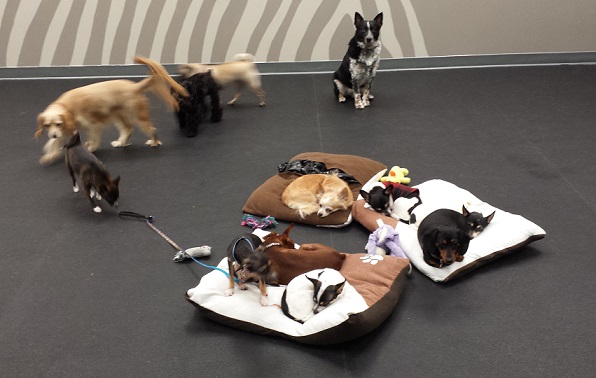
Visit more than one facility if possible, read reviews and ask how the staff would meet your dog’s particular needs. A clean space matters, but so do the daily routines, staff skills and quality of supervision.
Jme Thomas, executive director of Motley Zoo Animal Rescue at the time of our interview, shared several things dog parents should consider when evaluating a daycare.
She recommended asking about the dog-to-staff ratio and paying attention to how clean and well managed the facility appears. Thomas suggested approximately 10 to 12 dogs per person. Treat that as her recommendation rather than a universal safety standard: group size, the dogs’ needs, staff experience and the layout all matter.
Ask how many staff members are actively supervising each group, rather than simply how many employees are in the building.
Questions to Ask Before Booking
- How do you assess whether a dog is comfortable in this environment?
- How are playgroups matched for size, play style, energy and comfort?
- Are dogs actively supervised throughout group play?
- How do staff recognize stress, interrupt rough play and prevent bullying?
- What handling and training methods do you use?
- Can dogs take quiet breaks away from the group?
- What alternatives are available if my dog dislikes group play or a crate?
- How are entrances, exits and outdoor spaces secured?
- What are your vaccination, illness and cleaning policies?
- What happens if a dog becomes ill or injured, and how quickly will you contact me?
- How will you tell me about my dog’s behavior, rest and interactions during the day?
Thomas also suggested asking about webcams. They can be a useful way to check in, but they do not replace attentive staff or demonstrate that a facility is a good fit. A daycare without webcams may still provide excellent care.
Preparing Your Dog for a First Visit
Ask about the facility’s health and vaccination requirements before booking. Discuss any questions about your dog’s health, vaccination timing or suitability for group care with your veterinarian.
Share your dog’s medical needs, medications, behavior history, fears, preferences and any concerns about handling or other dogs. Being candid helps staff decide whether they can provide appropriate care.
Thomas recommended helping dogs become comfortable with unfamiliar people and practicing useful skills such as responding to their name, coming when called and walking on a loose leash. These skills can help, but they do not mean a dog will enjoy a busy playgroup.
Ask about rest arrangements, too. Thomas suggested finding out whether the daycare has a “crated nap time.” If your dog already rests comfortably in a crate, that routine may be familiar. If confinement causes distress, discuss other quiet resting options rather than rushing crate training to meet a booking date.
Start With a Short Trial
Ask whether your dog can begin with a brief introduction or shorter visit before attending a full day. The right pace depends on your dog and the facility’s assessment process.
Afterward, ask specific questions: Did your dog choose to interact? Could they move away from other dogs? Did they rest? Were there signs of fear, tension or difficulty settling?
A successful first visit is encouraging, but comfort can change as groups and routines change. Keep communicating with staff and remain open to shorter visits, a different care arrangement or deciding that daycare simply isn’t your dog’s preference.
Pay Attention After Each Visit
After the first day, your dog may be ready for some rest. Thomas noted that even the mental stimulation of daycare can be tiring, comparing it to coming home from a busy day at work.
Being pleasantly tired is different from being repeatedly exhausted or distressed. Watch for reluctance to enter the facility, unusual withdrawal, difficulty settling or other changes from your dog’s normal behavior. Discuss concerns with staff, and contact your veterinarian about illness, injury or persistent changes.
Daycare can offer enjoyable activity and social interaction for some dogs. Another dog may be happier with a familiar walker, individual care or a quieter day with appropriate breaks.
The best arrangement gives your dog companionship, activity, safety and enough undisturbed rest. Enjoying a large group of dogs is not a requirement for a happy life.
Does your dog enjoy daycare, or have you found another arrangement that suits them better?