
5 Puppy Exercise Tips: How to Get Your Puppy Tired
Table of Contents

If you have a puppy, you’re probably looking for some ideas on how to safely tire him out, especially if he’s in that naughty, “teenage” stage.
Taking your puppy for walks is a good idea, but you may be wondering how far you can walk him without putting too much stress on his joints. And, is it safe to take him running?
I asked two dog trainers to share some of their ideas for exercising a puppy, and here’s what they had to say.
Tips for tiring out your puppy
1. Go for lots of short walks
A series of short walks throughout the day is a good way to help your puppy feel tired without overdoing it, said Abby Harrison, a dog trainer with Sit Dog Stay in Texas.
“At a young age, it's not so much about hard core exercise as it is exploring the world,” she said.
Dog trainer Kate Connell, of Calmer Canines, also shared ideas for puppy exercise and training.
Start with short, gentle outings that let your puppy sniff, explore and rest. The right amount depends on their age, health, size, fitness, the weather and the type of activity. Ask your veterinarian for guidance, and shorten or stop an outing if your puppy slows down, seems uncomfortable or no longer wants to continue.
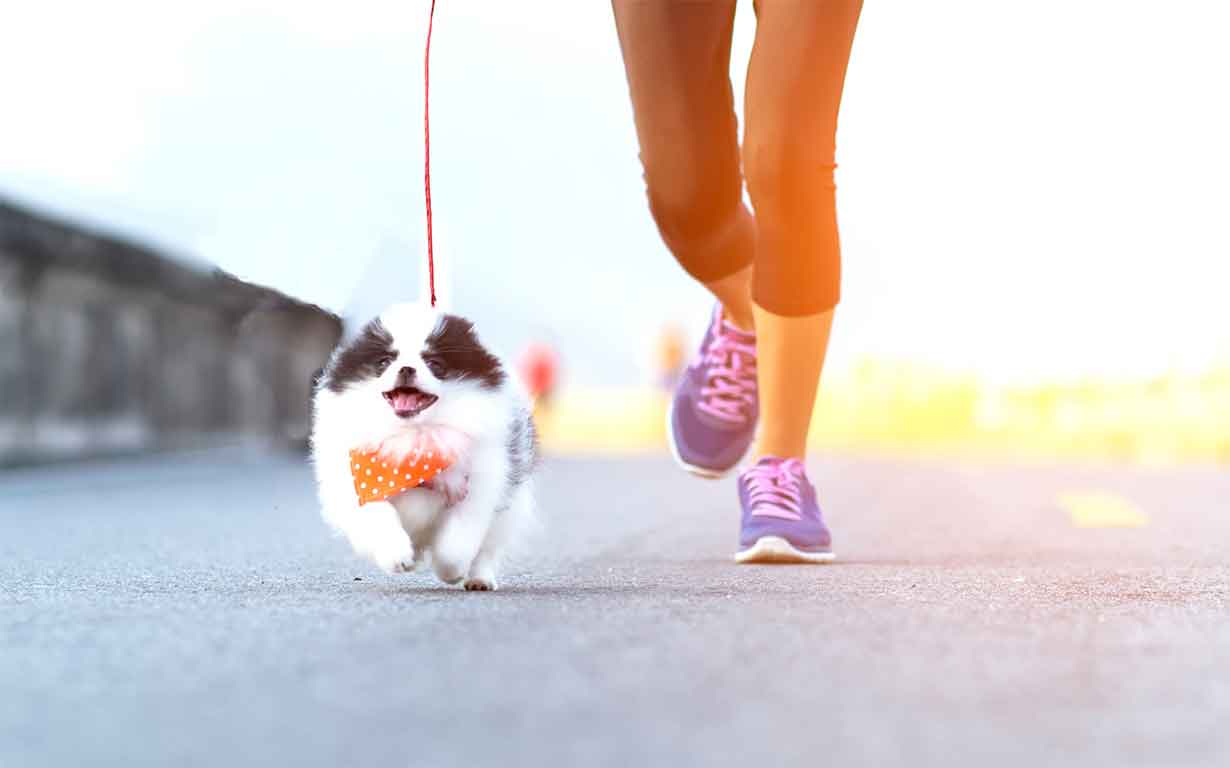
She said it’s best not to take your pup running or jogging until she is more mature in order to avoid stress on developing bones and joints.
“Should you choose to run with your dog when he is old enough, you will need to start gradually with a short jog, finishing with a walk, to build up their endurance,” Connell said.
2. Play games that involve running
Harrison suggested playing games that encourage the puppy to run such as fetch.
“What is important is that the puppy can stop at any moment as opposed to going out for a 10K training run on the sidewalk where the dog still has some distance before they are home,” she said.
Another great game for puppies is tug, according to Connell.
“You can even do this prior to walks in order to help reduce pulling on the leash. Just be sure to avoid leaping and jumping as much as possible as that puts a lot of stress on their developing joints,” she said.
If your puppy seems to really enjoy tug of war, they might like a tether tug toy for their yard.
3. Mental stimulation
Sometimes dog parents overlook mental stimulation, which is just as important as physical.
Harrison had the idea of creating a puzzle for your puppy by placing treats in an old muffin tin and then covering each treat with a tennis ball.
“From there, you can teach search games for a treat,” she said.
She also likes to toss a handful of dry dog food into the grass to let the puppy or dog search for the pieces.
4. Puppy play dates
Puppy play dates with friends and other puppies or dogs are another great way to wear your puppy out, Connell said.
To be safe, she said to interrupt play frequently in order to prevent playing too rough or over-arousal.
Balance activity with plenty of sleep and quiet rest. An overtired puppy may become more excitable or mouthy rather than settle down.
Keep fetch gentle, brief and supervised, avoiding repeated high jumps or sharp turns. Supervise food puzzles and use balls too large for your puppy to swallow; remove any damaged toys.
Ask your veterinarian which locations and playmates are appropriate while your puppy’s vaccinations are still in progress.
5. Training
Finally, Connell recommended working on obedience or trick training with your puppy.
“Training your puppy may not provide a ton of physical exercise, but it will usually wear your puppy out far better than a walk!” she said.
She recommended training in short sessions of just a few minutes, but you can do multiple sessions per day.
Some basic commands to begin teaching your puppy could include come, sit, down and stay.