
Small Dog Harness Guide: Measuring, Fit & Choosing a Style
Table of Contents
- Why Consider a Harness for a Small Dog?
- How to Measure Your Dog for a Harness
- dogIDs Harness Sizes: Compare the Actual Ranges
- Understanding Harness Styles
- Check the Fit Before Your First Walk
- Common Fit Problems and What to Do
- Recheck the Fit as Your Dog Changes
- Need Help Choosing a Harness?
- Frequently Asked Questions About Small Dog Harnesses
Choosing a small dog harness starts with your dog’s measurements, not the size label. A “small” in one style may fit differently from a “small” in another, and a harness that adjusts around the chest still needs to suit your dog’s overall shape.
At dogIDs, our harness selection includes options for some small dogs, but we do not specialize in harnesses for the tiniest dogs. If your dog falls below a product’s listed adjustment range, choose a smaller, appropriately fitted option rather than trying to make an oversized harness work.
This guide explains how to measure, compare styles and check the fit before heading out together.
Why Consider a Harness for a Small Dog?
A harness provides a leash attachment around the torso rather than directly at the neck. That can be useful when you prefer a body attachment or your veterinarian recommends avoiding leash pressure on your dog’s neck.
A harness does not automatically prevent injury, stop pulling or guarantee that a dog cannot escape. Its design, adjustment and the way it is used all matter.
For a dog with coughing, neck pain, an airway condition or another medical concern, ask your veterinarian which equipment is appropriate.
How to Measure Your Dog for a Harness
Start With Chest Girth
Chest girth is the circumference around your dog’s rib cage behind the front legs. Use a flexible sewing tape, or a non-stretch piece of string that you can measure against a ruler.
- Have your dog stand comfortably.
- Place the tape around the chest behind the front legs, following the measuring position specified for the harness.
- Keep the tape flat and untwisted, without pulling it tightly into the coat or leaving it hanging loosely.
- Record the measurement in inches and repeat it to check your result.
- Compare it with the instructions and adjustment range for the exact product you are considering.
Do not automatically add another one or two inches. Use the measuring method requested by the manufacturer rather than adding a blanket allowance.
Check Any Additional Measurements
Some harnesses also specify a neck measurement or other dimensions. Follow that product’s diagram: a harness neck opening may sit differently from a collar, so the measurements are not always interchangeable.
A chest measurement within the listed range is a starting point. You still need to check strap placement, hardware weight and movement on your dog.
Visit the dogIDs sizing guides for additional measuring guidance.
dogIDs Harness Sizes: Compare the Actual Ranges
The table below compares the smaller listed options for three dogIDs harness styles. These are product-specific ranges, not a universal small-dog harness size chart.
| Harness | Size | Strap Width | Chest Girth |
|---|---|---|---|
| MAYA Dog Harness | Small | 3/4 inch | 8–14 inches |
| MAYA Dog Harness | Medium | 3/4 inch | 13–24 inches |
| Custom Embroidered Step-In Dog Harness | Small | 5/8 inch | 14–22 inches |
| Custom Embroidered No Pull Dog Harness | Medium | 3/4 inch | 18–28 inches |
Notice how much the ranges differ. A dog with a 12-inch chest falls within the MAYA Small’s listed range, but below the smallest listed range for the embroidered step-in and no-pull styles.
That does not make the MAYA an automatic fit. Its 3/4-inch strap, hardware and adjustment positions must also suit the individual dog.
Check the current product page before ordering. If the measurements or construction do not work for your dog, choose another design rather than leaving a harness loose or modifying it to force a fit.
Understanding Harness Styles
Step-In Harnesses
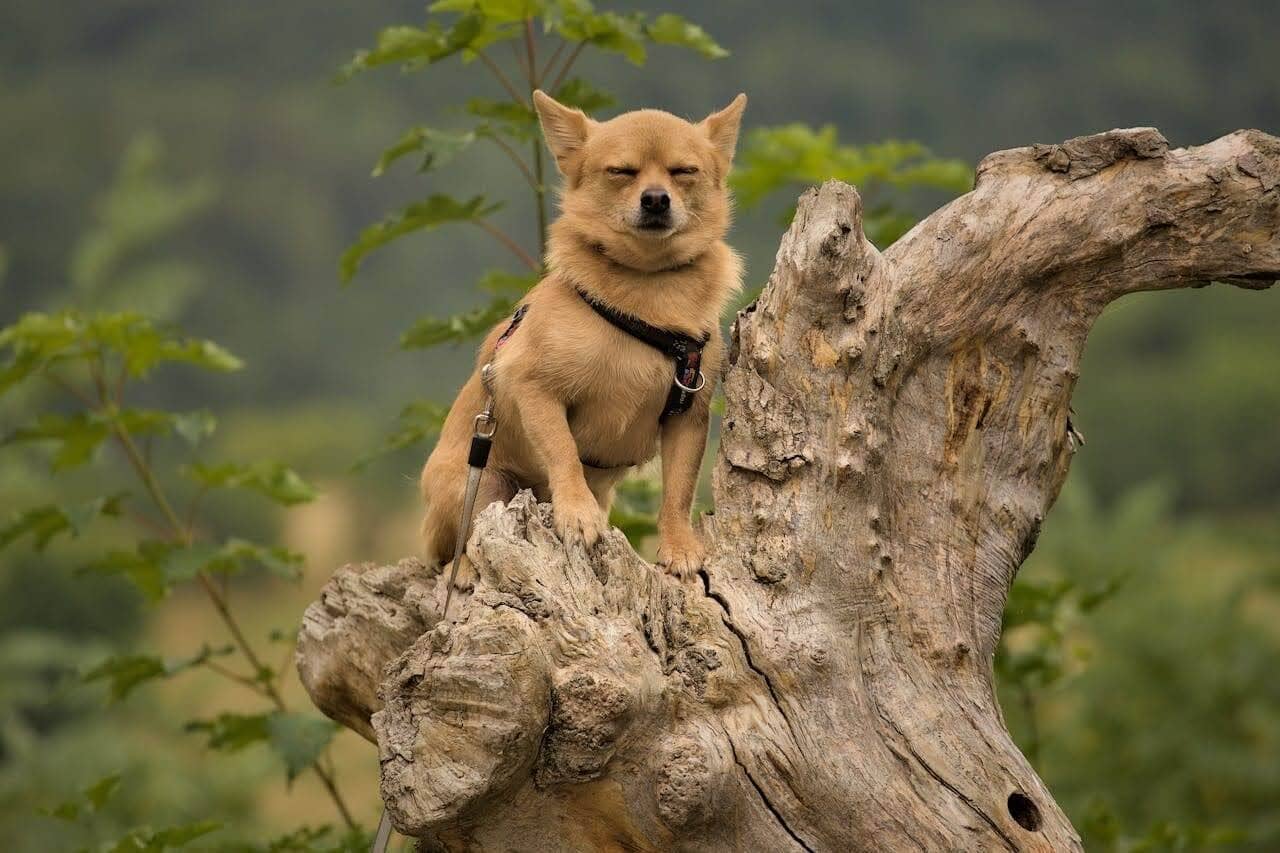
A step-in harness is put on by placing the dog’s front feet into the appropriate openings and fastening the harness according to its instructions.
Some dogs prefer this to equipment that passes over the head. Others are uncomfortable having their paws handled, so introduce the process gradually rather than assuming step-in is easiest for every dog.
The Custom Embroidered Step-In Dog Harness offers personalized lettering on the nylon strap. Its smallest listed girth range is 14–22 inches, so it should not be described as an XXS option.
MAYA Dog Harnesses
The MAYA Dog Harness uses handwoven cotton material and adjustable straps. It is a strap harness, rather than a padded vest.
The Small has a 3/4-inch strap and an 8–14-inch chest range. Other sizes extend the range, but the discontinued 1/2-inch XS and XXS options should not be used when choosing from the current selection.
Compare the pattern, construction and adjustment with your dog’s proportions. A smaller girth range alone does not establish that the harness is suitable for every tiny dog.
Front-Attachment and No-Pull Harnesses
A front attachment changes where the leash connects and may help some handlers manage forward pulling. It does not automatically teach a dog to walk without pulling.
The Custom Embroidered No Pull Dog Harness includes a martingale-style chest loop. Its smallest currently listed option is Medium, with an 18–28-inch girth range. It is not an XXS harness.
Whether a dog is energetic or quiet does not determine the correct harness by itself. Choose by fit, comfort, attachment design and the skills you are working on together.
Check the Fit Before Your First Walk
Fit the harness in a quiet, secure area before using it somewhere distracting.
- Follow the instructions: Put each strap in its intended position and fasten every buckle fully.
- Check clearance: Straps should not dig in, pinch or rub behind the front legs. Follow the product’s guidance for space under the straps.
- Watch movement: Let your dog walk, turn and lower their head. Look for shifting, twisting or interference with movement.
- Check the hardware: Make sure buckles and adjustment pieces do not crowd sensitive areas or feel disproportionately bulky.
- Check attachment: Use the designated leash ring or rings exactly as instructed for that model.
- Reassess security: A harness that appears comfortable while standing may shift when the dog turns or backs away.
No harness should be treated as escape-proof. If your dog has backed out of equipment before, get help assessing the fit and setup before using it in an open or busy area.
Common Fit Problems and What to Do
The Harness Shifts or Hangs Loose
Check the measurements, strap routing and adjustment points. If the harness cannot be adjusted into an appropriate position, it may be the wrong size or shape for your dog.
Do not assume loose equipment is acceptable because your dog will grow into it.
The Harness Rubs or Leaves Marks
Stop using it and reassess the fit, strap position and condition. Rubbing does not always mean you simply need the next size up; the construction may not suit your dog.
Persistent redness, soreness or discomfort warrants veterinary advice.
Your Dog Avoids Having It Put On
Check for discomfort first. Then introduce the harness in short sessions with rewards, allowing your dog to investigate it and practice individual steps.
A different opening or fastening style may be more comfortable for your dog. Avoid turning the process into a struggle.
Your Dog Still Pulls
Changing equipment does not replace training. Practice where your dog can pay attention, reward walking with slack in the leash and increase distractions gradually.
If pulling remains difficult to manage, a qualified reward-based trainer can help with both equipment selection and walking skills.
Recheck the Fit as Your Dog Changes
Growing puppies, weight changes and coat changes can all affect harness fit. Check regularly, including after grooming and whenever an adjustment has moved.
Inspect the straps, stitching, buckles and attachment rings for wear. Follow the material’s care instructions, and remove the harness when your dog is unattended or crated.
If the harness includes embroidered contact information, check that it remains visible and your phone number is current.
Need Help Choosing a Harness?
Have your dog’s measurements and the name of the product ready when you contact us. Our team can help explain the available ranges, but we would rather tell you a product is unsuitable than encourage a poor fit.
Explore our dog harness collection or contact dogIDs for help comparing options.
If you are still deciding between neck and torso attachment, read Martingale Collar vs. Harness: How to Choose for Your Dog.
Frequently Asked Questions About Small Dog Harnesses
Are XS and XXS harness sizes the same across brands?
No. Size labels are not standardized. Compare your dog’s measurements with the exact product’s chart and check the fit after it arrives.
Does dogIDs specialize in harnesses for extra-small dogs?
No. Our selection fits some small dogs, but we do not specialize in harnesses for the tiniest dogs. Check both the listed range and the construction. If your dog needs a smaller or lighter design, choose an appropriately sized option elsewhere.
Should I add inches to my dog’s chest measurement?
Do not add a blanket allowance. Follow the measuring instructions for the specific harness, then compare your result with its listed range. Check strap clearance and movement when fitting the actual product.
Should I always size up if my dog is between sizes?
No. An oversized harness may shift or allow your dog to back out. Compare the full adjustment ranges and ask for help if neither size provides an appropriate fit.
Can a small dog use a no-pull harness?
Possibly, if the particular design fits correctly and is suitable for the dog. The dogIDs Custom Embroidered No Pull Dog Harness currently starts at an 18–28-inch girth range, so it should not be recommended for a dog below that range.
Do I need a harness just because my dog is small?
Size alone does not decide the best equipment. Consider health, comfort, fit and activity. If your veterinarian recommends avoiding leash pressure on the neck, ask which harness design is appropriate for your dog.